
Retirement Checklist: Embarking on retirement is a significant life transition, demanding careful planning and preparation. This comprehensive guide navigates you through the essential steps, ensuring a smooth and fulfilling retirement journey. We’ll explore financial strategies, healthcare options, housing considerations, legal and estate planning, and much more, empowering you to create a retirement plan tailored to your unique needs and aspirations.
From securing your financial future and optimizing healthcare coverage to planning your ideal lifestyle and legacy, this checklist acts as your roadmap to a successful and enjoyable retirement. We cover everything from budgeting and saving to managing your estate and maintaining your well-being, offering practical advice and actionable steps to ease your transition.
Healthcare in Retirement
Planning for healthcare in retirement is crucial, as medical expenses can significantly impact your finances. Understanding your options and proactively managing your health can help ensure a comfortable and secure retirement. This section Artikels key aspects of healthcare planning for retirees.
Medicare and Supplemental Insurance Options
Medicare is a federal health insurance program for people 65 and older and some younger people with disabilities. It’s divided into four parts: Part A (hospital insurance), Part B (medical insurance), Part C (Medicare Advantage), and Part D (prescription drug insurance). Part A is generally premium-free for those who qualify, while Parts B, C, and D often involve monthly premiums.
Medicare doesn’t cover everything, so many retirees choose to purchase supplemental insurance (Medigap) to help cover out-of-pocket costs like co-pays, deductibles, and gaps in coverage. Medigap plans are offered by private insurance companies and vary in coverage and cost. Medicare Advantage plans (Part C) are offered by private companies and can provide additional benefits, such as vision and dental coverage, but may also have limitations on which doctors and hospitals you can use.
Carefully comparing plans and understanding the coverage details is essential before making a decision.
Maintaining Good Health and Preventing Costly Medical Issues
Proactive health management is key to reducing healthcare costs in retirement. This includes regular checkups with your doctor, adhering to recommended screenings and vaccinations, maintaining a healthy diet and exercise routine, and managing any chronic conditions effectively. For example, managing diabetes through diet and medication can prevent serious complications and expensive hospitalizations. Similarly, regular dental checkups can prevent costly dental procedures later.
Quitting smoking and limiting alcohol consumption are also vital for long-term health and reducing the risk of developing costly health problems. Staying active and socially engaged can contribute to overall well-being and reduce the risk of depression and other mental health issues.
Selecting a Suitable Healthcare Provider After Retirement
Choosing a healthcare provider after retirement involves several considerations. Proximity to your home, the provider’s experience and specialization, and the availability of services are important factors. Checking the provider’s credentials and patient reviews can help make an informed decision. Many retirees choose to maintain their existing relationships with their doctors, while others may opt for a new provider closer to their retirement residence.
It’s advisable to contact potential providers in advance to inquire about their services, fees, and acceptance of Medicare and supplemental insurance.
Potential Healthcare Costs to Anticipate During Retirement
Retirement healthcare costs can be substantial. It’s important to anticipate potential expenses such as:
- Medicare premiums (Parts B, C, and D)
- Medigap or supplemental insurance premiums
- Co-pays and deductibles for medical services
- Prescription drug costs
- Dental and vision care
- Long-term care expenses (nursing homes or assisted living)
- Over-the-counter medications and medical supplies
It’s advisable to create a detailed budget that incorporates these potential costs and to explore options for managing these expenses, such as long-term care insurance. A financial advisor can assist in developing a comprehensive retirement financial plan that addresses these healthcare-related costs.
Housing and Lifestyle Adjustments
Retirement often presents an opportunity to reassess your living situation and lifestyle. Many retirees find that their housing needs change significantly after leaving the workforce, prompting considerations about downsizing, relocating, or adapting their current home for aging in place. Careful planning in this area can significantly impact both your financial well-being and overall quality of life during retirement.
Downsizing and Relocating: Advantages and Disadvantages
Downsizing or relocating involves significant life changes, each with potential benefits and drawbacks. Downsizing, typically involving moving to a smaller home, can offer substantial financial advantages, such as reduced property taxes, lower utility bills, and less maintenance. This frees up capital that can be used for travel, hobbies, or healthcare expenses. Relocating to a different region might offer access to better climate, lower cost of living, or proximity to family and friends.
However, downsizing can also mean sacrificing space and potentially losing sentimental value attached to a long-time residence. Relocating involves the disruption of established social networks and familiar surroundings, which can be emotionally challenging for some. The financial implications of selling a property and purchasing another should also be carefully considered, including potential transaction costs and moving expenses. For example, a couple might downsize from a large suburban home to a smaller condo near a city center, enjoying lower maintenance and easier access to amenities, but potentially facing a higher cost of living in the city.
Conversely, they might relocate to a less expensive area with a warmer climate, enjoying a lower cost of living but potentially sacrificing proximity to family and friends.
Preparing a Home for Aging in Place
Adapting a home to accommodate the physical changes associated with aging is crucial for maintaining independence and safety in later life. This involves making modifications that enhance accessibility and reduce the risk of falls or injuries.
- Install grab bars in bathrooms and near stairways.
- Replace doorknobs with lever-style handles.
- Remove tripping hazards such as loose rugs and clutter.
- Improve lighting, particularly in hallways and stairwells.
- Install ramps or chair lifts if necessary.
- Consider widening doorways to accommodate wheelchairs or walkers.
Prioritizing home modifications that improve safety and accessibility is a proactive step in ensuring a comfortable and independent retirement. For example, a senior citizen might install a walk-in shower to reduce the risk of falls, or replace traditional light switches with illuminated switches for better visibility at night.
Affordable Housing Options for Retirees
Securing affordable housing is a significant concern for many retirees. Fortunately, various options exist, catering to diverse needs and budgets.
- Government-subsidized housing: Programs like Section 8 vouchers can significantly reduce housing costs for low-income seniors.
- Retirement communities: These offer a range of options, from independent living to assisted living and nursing care, but costs can vary widely.
- Senior co-housing: This involves shared living arrangements where residents share responsibilities and resources, potentially lowering individual costs.
- Reverse mortgages: This allows homeowners to access equity in their homes without selling, but it’s crucial to understand the terms and conditions carefully.
Careful consideration of available resources and individual needs is crucial when choosing affordable housing options. For instance, a retiree with limited income might benefit from applying for government-subsidized housing, while a retiree with more financial resources might opt for a retirement community offering various amenities and support services.
Maintaining an Active and Fulfilling Lifestyle
Retirement shouldn’t signify the end of an active and fulfilling life. Rather, it’s an opportunity to pursue passions, nurture relationships, and engage in activities that promote well-being.
- Volunteer work: Contributing to a cause you care about can provide a sense of purpose and social connection.
- Travel: Exploring new places and cultures can broaden your horizons and create lasting memories.
- Hobbies and interests: Dedicate time to activities you enjoy, whether it’s gardening, painting, or playing a musical instrument.
- Social engagement: Maintain strong social connections with family, friends, and community groups.
- Physical activity: Regular exercise is vital for maintaining physical and mental health.
Engaging in a variety of activities can help retirees maintain an active and fulfilling lifestyle, fostering both physical and mental well-being. For example, a retiree might volunteer at a local animal shelter, join a book club, or take up a new hobby like pottery, creating a fulfilling and socially enriching retirement experience.
Legal and Estate Planning: Retirement Checklist
Planning for your legal and financial affairs is crucial during retirement to ensure your wishes are carried out and your assets are protected. This involves creating or updating essential legal documents and organizing your finances to minimize potential complications for your loved ones. Careful planning in this area provides peace of mind and secures your legacy.
Basic Will and Power of Attorney
A will dictates how your assets will be distributed after your death. A power of attorney designates someone to manage your financial and legal affairs if you become incapacitated. While a simple will might list beneficiaries and their inheritance, a more comprehensive will could include stipulations regarding guardianship of minor children or instructions for managing specific assets. Similarly, a power of attorney can be limited to specific tasks or grant broad authority.
Creating these documents ensures your wishes are respected, regardless of your future capacity. Consider seeking legal counsel to ensure these documents are legally sound and tailored to your specific circumstances. A template for a basic will often includes sections for naming an executor, listing beneficiaries, and specifying the distribution of assets. A power of attorney template typically identifies the principal (the person granting the power), the agent (the person granted the power), and the scope of the authority granted.
These templates are readily available online, but professional legal assistance is recommended for complex situations.
Updating Beneficiary Designations
Regularly reviewing and updating beneficiary designations on retirement accounts, life insurance policies, and other financial instruments is paramount. Beneficiary designations override the instructions in your will, meaning outdated designations can lead to unintended consequences. For example, a beneficiary designation on a retirement account listing a deceased spouse would result in the assets being distributed according to the plan’s rules, potentially bypassing the wishes Artikeld in your will.
This process involves contacting the relevant financial institutions and updating the beneficiary information to reflect your current wishes. It’s advisable to review these designations at least annually or whenever significant life changes occur, such as marriage, divorce, or the birth or death of a family member.
Estate Planning Steps for Retirement
Estate planning involves a comprehensive approach to managing and distributing your assets. This includes creating or updating your will, establishing a power of attorney, and potentially creating a trust. It also involves considering tax implications and minimizing estate taxes. Furthermore, organizing important financial documents, such as insurance policies and bank statements, in a readily accessible location for your executor is a crucial step.
Finally, communicating your wishes to your family and ensuring they understand your plans is essential for a smooth transition. Engaging a financial advisor and an estate planning attorney can help you navigate the complexities of this process and create a tailored plan that aligns with your goals and circumstances.
Resources for Finding Qualified Advisors
Finding qualified legal and financial advisors specializing in retirement planning requires careful research. Professional organizations, such as the National Association of Personal Financial Advisors (NAPFA) and the American Bar Association (ABA), offer resources for finding certified financial planners and estate planning attorneys. Online directories and review platforms can also provide insights into the experience and expertise of potential advisors.
It’s important to verify credentials, check for any disciplinary actions, and schedule consultations to discuss your specific needs and ensure a good fit before engaging an advisor. References from trusted sources, such as friends or family, can also be invaluable in this process.
Social Security and Retirement Benefits
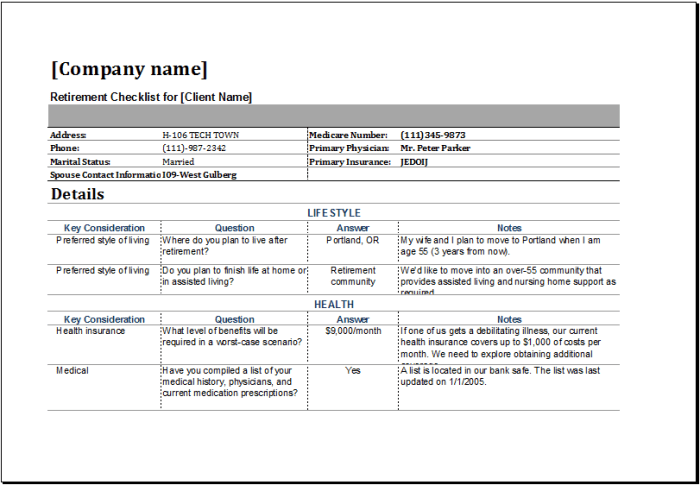
Planning for retirement often involves navigating the complexities of Social Security benefits. Understanding how to apply, the various benefit options available, and strategies for maximizing your payouts is crucial for a secure financial future. This section provides a comprehensive overview of Social Security and how it can contribute to your retirement income.
Applying for Social Security Retirement Benefits, Retirement checklist
The application process for Social Security retirement benefits is relatively straightforward. You can apply online at the Social Security Administration (SSA) website, by phone, or in person at a local SSA office. The online application is generally the most convenient option. You’ll need your Social Security number, birthdate, and other identifying information. The SSA will guide you through the process, verifying your eligibility and providing an estimated benefit amount.
It’s advisable to apply a few months before your full retirement age to ensure a smooth transition. Processing times vary, but you’ll receive notification once your application is approved and your benefits begin.
Social Security Benefit Options and Eligibility Requirements
Social Security offers several benefit options, each with its own eligibility requirements and payout structure. The full retirement age (FRA) is the age at which you’re entitled to receive your full retirement benefit. This age is gradually increasing and depends on your birth year. You can choose to begin receiving reduced benefits as early as age 62, or delay benefits beyond your FRA to receive a higher monthly payment.
Spousal benefits are available to eligible spouses of retirees, and survivor benefits are provided to surviving spouses and children. Eligibility requirements vary depending on the type of benefit and the applicant’s work history and relationship to the retiree. For example, to be eligible for spousal benefits, the spouse must be at least 62 years old and their spouse must be receiving Social Security retirement or disability benefits.
Strategies for Maximizing Social Security Benefits
Maximizing your Social Security benefits requires careful planning and consideration of several factors. Delaying your benefits beyond your FRA is a key strategy, as each year you delay results in a higher monthly payment. For instance, delaying benefits until age 70 can significantly increase your monthly income compared to claiming at your FRA. Another strategy involves coordinating benefit claiming with your spouse.
Depending on your respective ages and earnings histories, strategic claiming can maximize the total benefits received by the couple throughout their retirement. Consulting with a financial advisor specializing in retirement planning can provide personalized guidance on the optimal claiming strategy for your specific situation.
Impact of Delaying Social Security Benefits
Delaying Social Security benefits has a significant impact on overall retirement income. While you receive less money per month in the short term by claiming early, delaying benefits results in a substantially higher monthly payment for the remainder of your life. This increased monthly payment compensates for the delayed start, leading to a greater total lifetime benefit. For example, a person with an FRA of 67 who delays benefits until age 70 will receive a significantly higher monthly payment than someone who claims at age 62 or 67.
The increased payment can help offset potential inflation and ensure a more comfortable retirement. This is a crucial consideration when determining your optimal claiming age.
Retirement Activities and Hobbies
Retirement offers a unique opportunity to explore new interests and passions, fostering a fulfilling and engaging lifestyle. This transition allows individuals to dedicate time to activities previously neglected due to work commitments, leading to personal enrichment and improved well-being. Engaging in hobbies and activities can combat feelings of isolation and contribute significantly to overall happiness during retirement.
A fulfilling retirement often involves a carefully considered balance between structured activities and spontaneous leisure. Finding activities that align with personal interests and capabilities is crucial for long-term satisfaction. This section explores various options and suggests ways to incorporate them into a weekly routine.
Potential Hobbies and Activities for Retirement
The possibilities for retirement activities are vast and varied, catering to diverse interests and physical abilities. Choosing activities that promote both physical and mental well-being is key to a healthy and happy retirement.
- Creative Pursuits: Painting, drawing, sculpting, pottery, writing, playing a musical instrument, photography, knitting, crocheting, quilting.
- Physical Activities: Gardening, hiking, swimming, cycling, yoga, tai chi, dancing, golf, bowling.
- Intellectual Stimulation: Reading, learning a new language, taking online courses, joining a book club, attending lectures, playing chess or bridge.
- Social Activities: Volunteering, joining a club or group (e.g., hiking club, book club, choir), attending community events, traveling.
- Skill Development: Cooking, baking, woodworking, home repair, learning a new software program.
Sample Weekly Schedule Incorporating Leisure Activities and Social Engagement
A well-structured weekly schedule can help retirees maintain a sense of purpose and prevent feelings of aimlessness. This sample schedule emphasizes a balance between solitary pursuits and social interaction.
| Day | Morning | Afternoon | Evening |
|---|---|---|---|
| Monday | Gardening | Book Club Meeting | Dinner with friends |
| Tuesday | Yoga class | Volunteer work at local library | Quiet evening, reading |
| Wednesday | Painting class | Lunch with a friend | Attend a community concert |
| Thursday | Hiking | Grocery shopping, errands | Movie night with family |
| Friday | Learn a new language online | Relax, pursue a personal hobby | Dinner at a restaurant |
| Saturday | Attend a local farmers market | Spend time with family | Board games with friends |
| Sunday | Relax, pursue a personal hobby | Prepare for the week ahead | Quiet evening at home |
Maintaining Social Connections and Combating Loneliness in Retirement
Maintaining strong social connections is crucial for mental and physical well-being in retirement. Loneliness can have significant negative impacts on health, so actively cultivating social relationships is essential.
Strategies to combat loneliness include joining social groups, volunteering, engaging in community activities, staying connected with family and friends (through phone calls, visits, or online communication), and participating in group activities like exercise classes or book clubs. Regular social interaction provides emotional support, reduces stress, and promotes a sense of belonging.
Resources for Retirees Seeking Volunteer Opportunities or Continuing Education
Many organizations offer volunteer opportunities and continuing education programs specifically designed for retirees. These resources provide opportunities for personal growth, social interaction, and giving back to the community.
- VolunteerMatch: A website connecting volunteers with organizations needing assistance.
- Idealist: A platform featuring volunteer opportunities and non-profit jobs.
- Local community centers and senior centers: Often offer volunteer opportunities and classes.
- Colleges and universities: May offer audit courses or continuing education programs for seniors at reduced rates.
- Online learning platforms: Coursera, edX, and others offer a wide range of courses on various subjects.
Understanding Retirement
Retirement marks a significant life transition, representing the cessation of regular employment and the commencement of a new phase focused on personal pursuits and leisure. It’s not a singular event but rather a process unfolding over time, characterized by distinct stages and individual experiences. Understanding these nuances is crucial for a successful and fulfilling retirement.Retirement encompasses various stages, each with its own set of challenges and opportunities.
The initial stage often involves a period of adjustment, as individuals adapt to a change in routine and social interaction. This may be followed by a period of exploration, where retirees discover new hobbies, volunteer opportunities, or travel plans. A later stage might focus on maintaining health and well-being, managing finances, and strengthening social connections. The final stage often involves managing age-related health concerns and reflecting on life’s accomplishments.
Different Retirement Lifestyles and Approaches
Retirement lifestyles are as diverse as the individuals who experience them. Some retirees embrace a highly active lifestyle, traveling extensively, pursuing new hobbies, and engaging in volunteer work. Others opt for a more relaxed pace, focusing on spending time with family and friends, tending to their gardens, or pursuing creative endeavors. Still others may choose to remain active in their professional fields through consulting or part-time work, extending their professional engagement into retirement.
The approach to retirement is deeply personal and should align with individual preferences, financial resources, and health status. For example, a retired teacher might volunteer at a local school, while a retired business executive might pursue a passion for photography or golf. A retiree with limited mobility might find satisfaction in gardening or engaging in online communities.
The Importance of a Well-Defined Retirement Plan
A well-defined retirement plan is paramount for a successful transition. This plan should encompass financial planning, including savings, investments, and budgeting; healthcare planning, considering insurance coverage and long-term care options; and lifestyle planning, encompassing housing, social activities, and personal pursuits. A comprehensive plan minimizes financial stress and uncertainty, allowing retirees to focus on enjoying their newfound freedom. Without a plan, retirees may face unexpected challenges, leading to financial instability and reduced quality of life.
For instance, a carefully crafted plan can help retirees manage the costs of healthcare, maintain their desired lifestyle, and provide for unforeseen expenses.
Emotional and Psychological Aspects of Transitioning into Retirement
The transition to retirement can evoke a complex array of emotions. While many retirees anticipate this phase with excitement and anticipation, others may experience feelings of anxiety, loss of identity, or even depression. The loss of routine, social interaction, and professional purpose can be significant. It is crucial to acknowledge and address these emotions, seeking support from family, friends, or professional counselors if needed.
Engaging in activities that foster a sense of purpose and connection, such as volunteering or joining social groups, can help mitigate negative feelings and promote a smoother transition. For example, participation in community activities can help combat feelings of isolation, while engaging in hobbies can provide a sense of accomplishment and purpose. Maintaining social connections is also vital for emotional well-being during retirement.
Planning for retirement is a journey, not a destination. This Retirement Checklist provides a solid foundation for your preparations, equipping you with the knowledge and resources to navigate this significant life change. Remember, proactive planning and regular review are key to adapting to changing circumstances and ensuring your retirement aligns with your evolving goals and aspirations. Embrace this new chapter with confidence, knowing you’ve taken the necessary steps to secure a comfortable and fulfilling future.
Q&A
What if I don’t have enough savings for retirement?
Explore options like downsizing your home, delaying retirement, or seeking part-time employment to supplement your income. Consult a financial advisor to develop a personalized plan.
How do I choose the right healthcare plan in retirement?
Carefully compare Medicare plans and supplemental insurance options based on your health needs and budget. Consider factors like coverage, premiums, and deductibles.
What are some common estate planning mistakes to avoid?
Failing to create a will, neglecting to update beneficiary designations, and not having a durable power of attorney are common mistakes. Consult with an estate planning attorney to avoid these pitfalls.
When should I start claiming Social Security benefits?
The optimal claiming age depends on your individual circumstances and life expectancy. Consult a financial advisor or Social Security representative to determine the best strategy for maximizing your benefits.


